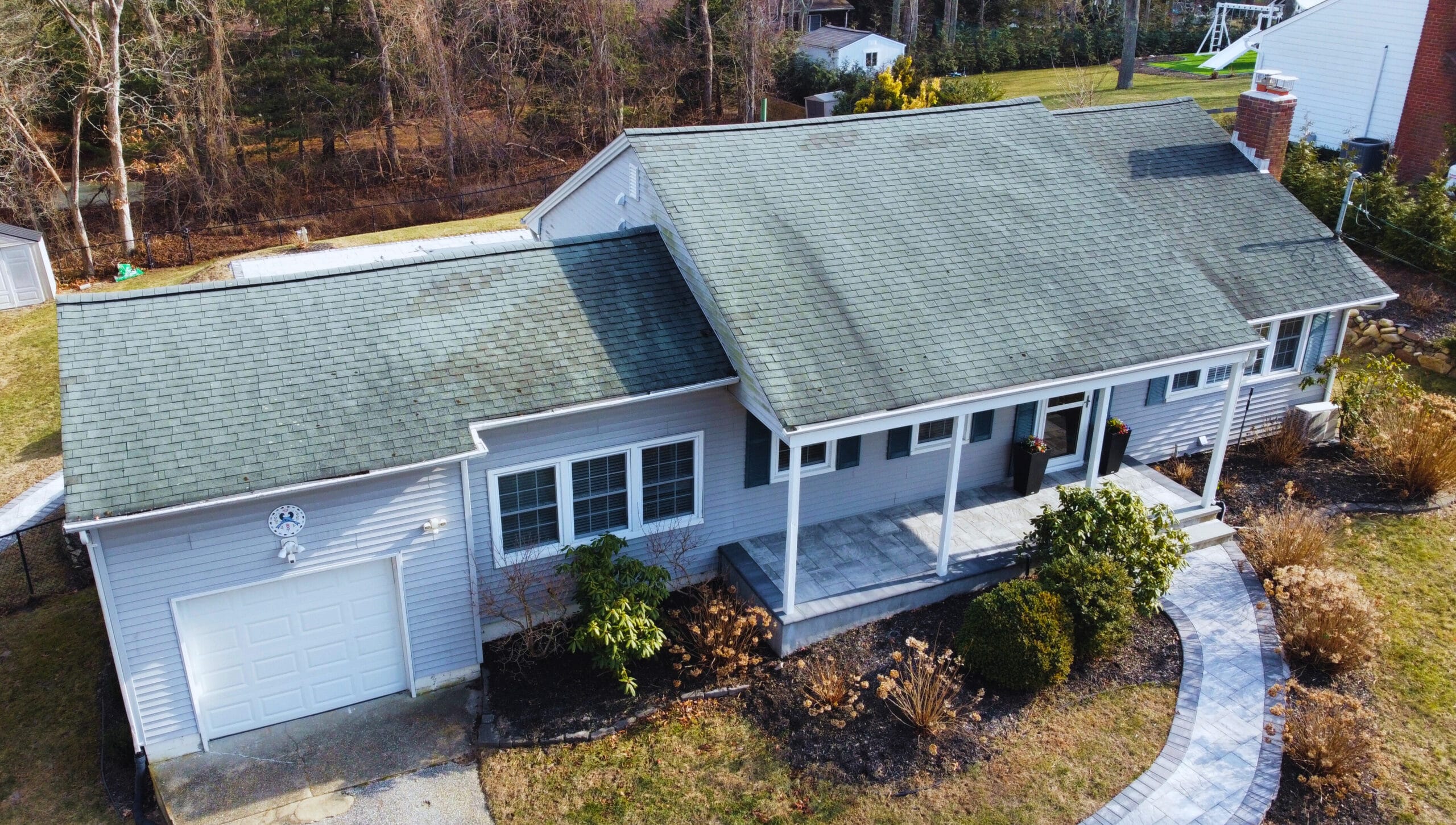
Most homes on Long Island were built between the 1940s and 1970s. That covers the bulk of Nassau County and a large portion of Suffolk County. If you’re buying here, you’re almost certainly buying something that’s 50 to 80 years old. That’s not a problem on its own. Plenty of these homes are in great shape and were built to last. But they have specific issues that come up repeatedly, and knowing about them before your inspection contingency expires is a lot better than finding out after closing.
Here’s what I see consistently when inspecting older Long Island homes.
Slab Foundations and What’s Underneath Them
The post-war communities that define mid-island Nassau County and much of western Suffolk were built fast. Slab foundations made that possible. Levittown, Hicksville, East Meadow, and Lindenhurst are full of them, along with dozens of similar neighborhoods.
On a slab, the drain and supply lines often run under the concrete. Drain pipes are typically cast iron, and at 60-plus years, cast iron corrodes from the inside out. Supply lines are usually copper, which can develop pinhole leaks as it ages. When either fails, getting to it usually means breaking through the floor. Depending on the location and extent of the problem, that can be a significant repair. It’s worth asking your plumber about a camera inspection of the drain lines before closing if there’s any concern about pipe condition.
Unfortunately, I learned this firsthand in my Levitt home. A hot water supply line under the slab in my kitchen developed a leak, and the telltale sign was the tile floor getting noticeably warmer in one spot. The repair meant breaking through the slab. We got extremely lucky – the hottest tiles ended up being directly under my stove, which is where the leak was. Once everything was patched and the stove went back in place, you’d never know there was a problem. A few feet in any direction and it would have been a much bigger headache.
Electrical Systems
Age shows up in the electrical system more consistently than almost anywhere else. Here are a few things to be aware of.
Knob-and-tube wiring, found in homes built before roughly 1950, is ungrounded and wasn’t designed for the loads modern households put on a system. It’s not automatically dangerous if it’s in good condition and hasn’t been modified, but insurance carriers often flag it and lenders sometimes require remediation. This shows up most in the older villages, places like Garden City and Rockville Centre, where a lot of the housing stock predates 1950.
Aluminum branch circuit wiring shows up in some homes built (or that were remodeled) in the late 1960s and early 1970s. It expands and contracts differently than copper and can loosen at connections over time, which creates a fire risk. I’ve dealt with this personally. I noticed a burning smell at an outlet in my home and found it was overheating. An electrician called out the aluminum wiring and remediated it with a copper pigtail and antioxidant compound at the connection. Full replacement is the more comprehensive fix, but the pigtail method is an approved repair when done at every termination point. This comes up often in the Suffolk tract neighborhoods built during that boom, particularly in Farmingville and Coram.
Federal Pacific and Zinsco electrical panels are still present in a lot of older Long Island homes. Both brands have documented histories of breaker failure, and replacement is typically recommended.
Many homes from this era also came with 60-amp or 100-amp electrical service. That’s generally insufficient for how people use power today. Upgrading to 200-amp service is a common improvement, but it’s a cost to factor in if the current service is undersized.
Oil Tanks
Oil heat is still common across Long Island, and many older homes have or had an oil storage tank. Above-ground tanks in basements are visible and easy to assess. Buried tanks are a different situation.
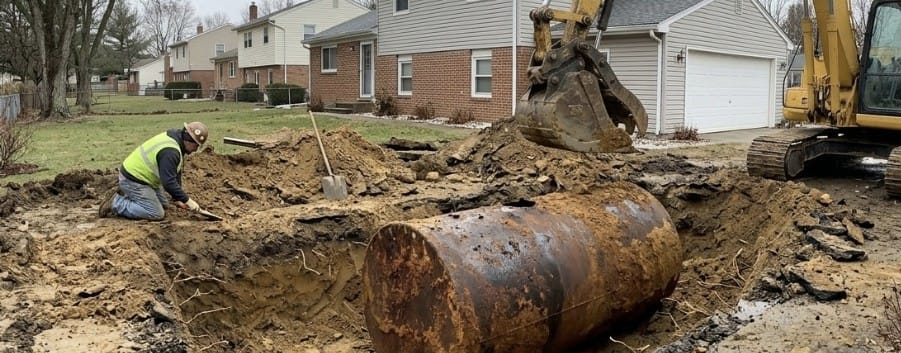
Any underground tank, whether actively used or abandoned, can leak into the surrounding soil. A slow leak on an active tank can go unnoticed for years. An abandoned tank that wasn’t properly decommissioned carries the same risk. Either way, once contamination is confirmed, you’re looking at remediation costs that can run into the tens of thousands of dollars, and depending on the extent of soil or groundwater impact, potentially much more. DEC involvement can add regulatory complexity and fines on top of the cleanup itself. Buried tanks are especially common in neighborhoods like Northport and Huntington, where oil heat has been the standard for generations.
Some sellers don’t know a tank is buried on the property because it was decommissioned decades before they owned the house, or wasn’t disclosed in the chain of ownership. Look for capped fill and vent pipes on the exterior of the house, which indicate a buried tank was once there. If there’s any uncertainty, a tank sweep by a qualified contractor before closing is money well spent.
Lead Paint and Asbestos
Homes built before 1978 may contain lead-based paint. Homes built before the mid-1980s may contain asbestos in pipe insulation, floor tiles, ceiling tiles, and around boiler components. When these materials are in good condition and undisturbed, they’re generally not an immediate health concern. The issue comes up during renovation or when materials are deteriorating.
Pay attention to pipe wrap insulation in basements, older floor tiles (9×9 vinyl tiles are a common indicator), and any textured or sprayed ceiling finishes. Testing by a qualified contractor is the only way to confirm whether these materials contain hazardous content. This comes up frequently in older housing stock in places like Babylon and Great Neck, where plenty of homes predate 1978 by a wide margin.
Mechanical Systems and Roofing
Older homes sometimes still have their original boiler or furnace. A unit that’s been running for 25 or 35 years may still be functional on the day of inspection, but it’s a near-term replacement. Same goes for the water heater and the roof.
These aren’t reasons to walk away from a property, but they’re costs to factor into your offer and your budget. Knowing the ages and condition of major systems before you’re under contract gives you something to work with.
Cesspools and Septic Systems in Suffolk County
Most of Nassau County is on municipal sewer. Most of Suffolk County is not, and if you’re buying there, there’s a good chance the home uses a cesspool or septic system, and that’s something buyers from Nassau or the city often don’t think to ask about until after the inspection.
A cesspool is a buried concrete ring that collects waste and allows liquids to leach into the surrounding soil over time. They work until they don’t. An older cesspool that’s been in service for 40 or 50 years may be near the end of its useful life. Replacement costs typically start at several thousand dollars and go up from there if the system has failed or soil conditions are poor.
Suffolk County has also been tightening regulations around nitrogen-reducing septic technology under its Reclaim Our Water initiative. Depending on the location, there may be current or future requirements to upgrade to an Innovative and Alternative (I/A) system. Those cost considerably more than a conventional cesspool replacement.
A cesspool inspection by a licensed Suffolk County company before closing is worth scheduling. At a minimum, ask the seller when the system was last pumped and whether there’s been any history of backups or service issues. If the property has a private well, confirm the distance between the well and the cesspool. Smithtown and Commack are two towns where this comes up most, and it’s worth asking about early rather than after your inspection contingency is close to expiring.
Unpermitted Work
Decades of ownership tend to mean decades of renovations, and a lot of that work on Long Island was never permitted. Garage conversions and dormer additions come up more than anything else.
Garage conversions are extremely common in Nassau County, where attached garages on post-war homes were small. Converting that space into a bedroom or office seems straightforward, but it typically requires permits for the structural changes, electrical work, insulation, and egress. When it’s done without permits, the work often doesn’t meet code, and the converted space may not be recognized in the home’s legal square footage. That can create issues with your lender, your insurer, and eventually your buyer if you sell.
Dormer additions are similarly common, especially on Cape Cod style homes. Done properly, a dormer is a significant structural project involving roof framing, load-bearing considerations, insulation, windows, and finish work. When dormers are added informally, the framing is sometimes undersized, insulation is inadequate, and moisture problems develop at the transitions between the new and existing roof lines. These don’t always show up visually from the interior but often surface during a thorough inspection.
Your real estate attorney can pull permit records from the municipality before you close. If a finished basement, converted garage, or dormer addition doesn’t have a corresponding permit on file, there’s a good chance it also lacks a certificate of occupancy. That’s worth understanding before you’re committed to the purchase, because resolving it after closing becomes your problem. This comes up constantly in Wantagh and Bethpage, where the original Cape Cod and ranch layouts left little room to grow without converting existing space.
Coastal and Flood Zone Considerations
If you’re buying near the water, along the South Shore, Great South Bay, or Long Island Sound, there are additional things to consider. Salt air accelerates corrosion on exterior components, mechanical equipment, and fasteners. High water tables affect drainage and basement conditions. Elevated or modified structures sometimes have unusual framing or foundation configurations. This applies directly to South Shore communities like Freeport and Long Beach, along with North Shore areas like Port Washington.
Flood zone designation is worth confirming early. It directly affects flood insurance cost and availability, which can have a real impact on your monthly carrying costs. Properties in high-risk zones can carry flood insurance premiums that run several thousand dollars a year, and that number needs to be part of your calculation before you’re under contract.
Sandy changed the conversation about coastal risk on Long Island in a way that hasn’t fully faded. Homes that flooded in 2012 sometimes have repair history that isn’t fully documented, and elevated homes that were lifted after the storm may have had that work done under varying levels of oversight. If you’re buying in an area that took a direct hit, it’s worth asking about the home’s Sandy history specifically. A seller may not volunteer it, but it’s a reasonable question and the answer matters.
Schedule a Home Inspection on Long Island
None of the issues above are reasons to avoid older homes. Most Long Island buyers don’t have a realistic path to new construction anyway. Going into an inspection with some context means you’ll get a lot more out of it. You’ll have a better sense of which findings matter, what realistic follow-up costs look like, and where you have room to negotiate.
If you’re buying a home in Nassau or Suffolk County and want an inspection done right, I’d be glad to help. I take the time to walk you through what I found and why it matters, and my reports are written to be clear and actionable, not just check a bunch of boxes. Get in touch to schedule or ask a question before you book.