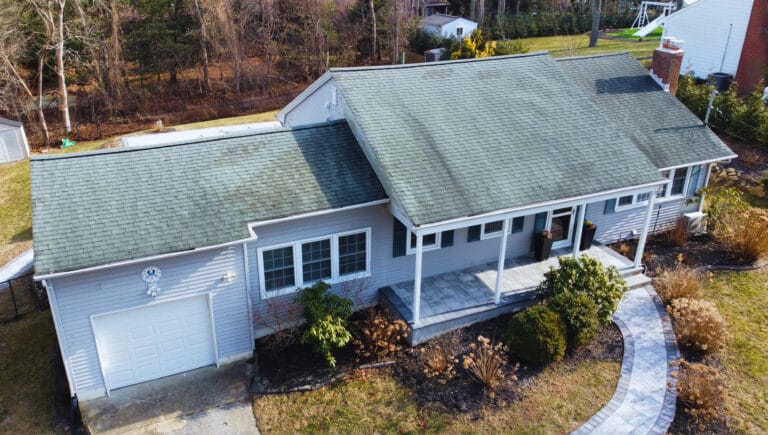
Home inspection reports are usually pretty long. They document everything from routine wear-and-tear issues to material defects. The challenge for buyers isn’t the length of the report. It’s figuring out which findings actually affect their decision to move forward.
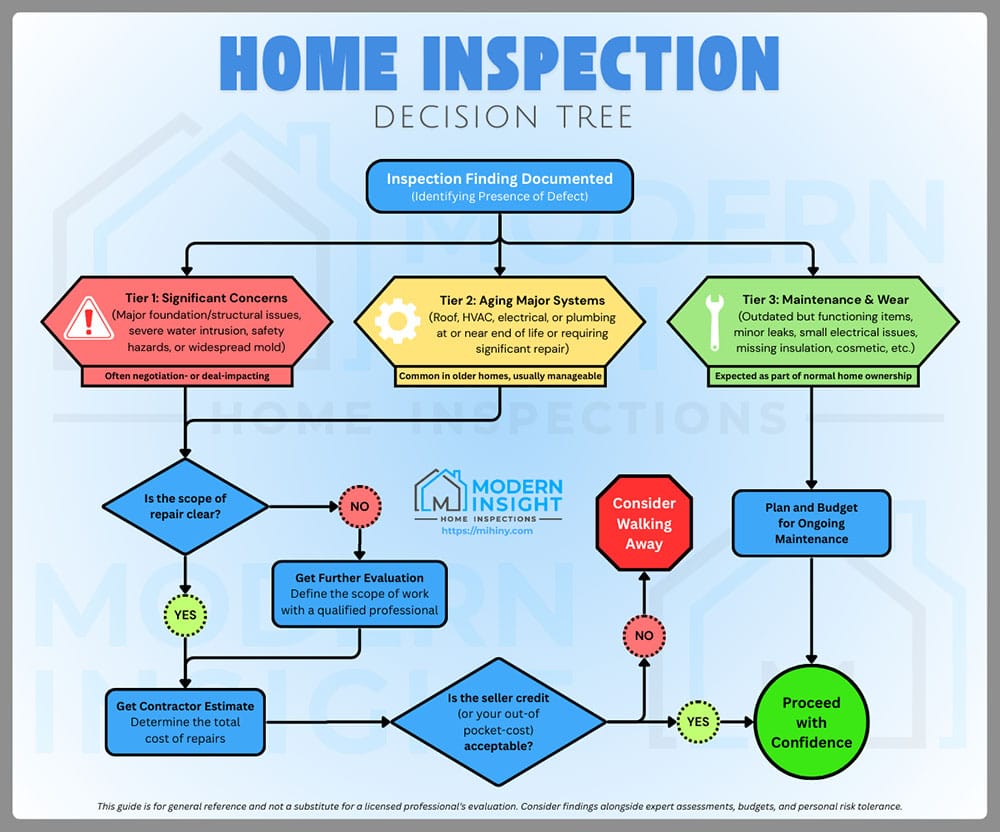
The home inspection decision tree below is meant to bring order to that moment. It helps separate meaningful risks from normal ownership issues and points you toward a reasonable next step.
Step 1: Categorize Your Home Inspection Findings
Every path starts the same way: a finding has been identified. The first question is how serious it is. Most findings fall into three categories:
- Tier 1: Material Defects & Significant Concerns. These involve structure, safety, or major water intrusion. Examples include severe foundation movement, compromised framing, widespread mold tied to moisture problems, or conditions that pose a clear safety risk. These issues often affect negotiations and sometimes determine whether a purchase makes sense at all.
- Tier 2: Aging Major Systems. This covers major systems near the end of their service life. This includes roofs, heating and cooling equipment, electrical systems, and plumbing components that are worn or outdated but still functioning. They usually don’t stop a deal, but they should factor into planning and price. A system nearing the end of its life isn’t an emergency, but after laying out a big down-payment and taking on a mortgage, do you have money set aside to replace a roof?
- Tier 3: Maintenance and Normal Wear. These are items like minor leaks or slow running drains, dead GFCI outlets or a ceiling fan that doesn’t work, less-than-ideal amounts of insulation in the walls or attic, aging appliances, or cosmetic defects. Every home has them. They’re part of ownership and rarely drive the purchase decision.
Step 2: Is the Scope of Repair Clear?
When a finding falls into the “Significant Concerns” category, the next step is deciding whether the scope of repair is clear. A defined repair with a known method and price is very different from a condition that hasn’t been fully evaluated.
If the scope isn’t clear, further evaluation is needed. That usually means bringing in a qualified professional (sometimes a structural engineer) who specializes in the issue. The goal is not to chase worst-case scenarios. It’s to understand what needs to be fixed and why.
Step 3: Establish the Cost for Negotiating Repairs
Once the scope is clear, a contractor estimate turns the issue into a concrete number. At that point, the decision is in your hands. Can you get the seller to credit you for the repair, or if not, are the out-of-pocket costs acceptable to you?
If they are, you move forward knowing exactly what you’re taking on. If they aren’t, walking away is a reasonable option. Not every problem is worth taking on. Major issues like a collapsing foundation can not only be very expensive, but often take a long time and a lot of steps to remediate.
Turning Inspection Urgency into Clarity
Inspection reports can feel overwhelming because these categories are often mixed together. Minor items and serious issues often appear side by side. Without context, a dead outlet can feel just as urgent as a buckling foundation wall. If you’d like to see how a professional report organizes findings, check out some of my sample home inspection reports.
The decision tree helps separate urgency from importance. A home inspection isn’t a pass/fail test. It’s a way to evaluate the visible components and decide whether the home fits your situation. Using a structured approach like this decision tree, combined with a professional inspection report, gives you the clarity you need to make a confident purchase. You can learn more about my approach to home inspections here.